


Welcome to ECMS
Thank you for choosing ECMS! The next few sections discuss some of the ways we will work with you to welcome your child to our service.
This page covers the essentials, but if you have more curiousities about Smooth Start at ECMS, please:
- watch this 20-minute YouTube video
- download the Smooth Start PDF booklet.
Getting ready
Orientation
Orientation at ECMS means meeting the educators before your child starts, and further conversations once they do start, so that we understand your child’s needs and any concerns you may have. Orientation usually happens at the beginning of Term 1 or whenever your child starts long daycare. All families are welcome.
Your service will share session dates and details before your child starts.
What to bring on the day
- A backpack/bag
- A complete change of clothing
- A wide-brimmed sun hat
- Sunglasses
- A drink bottle with fresh water
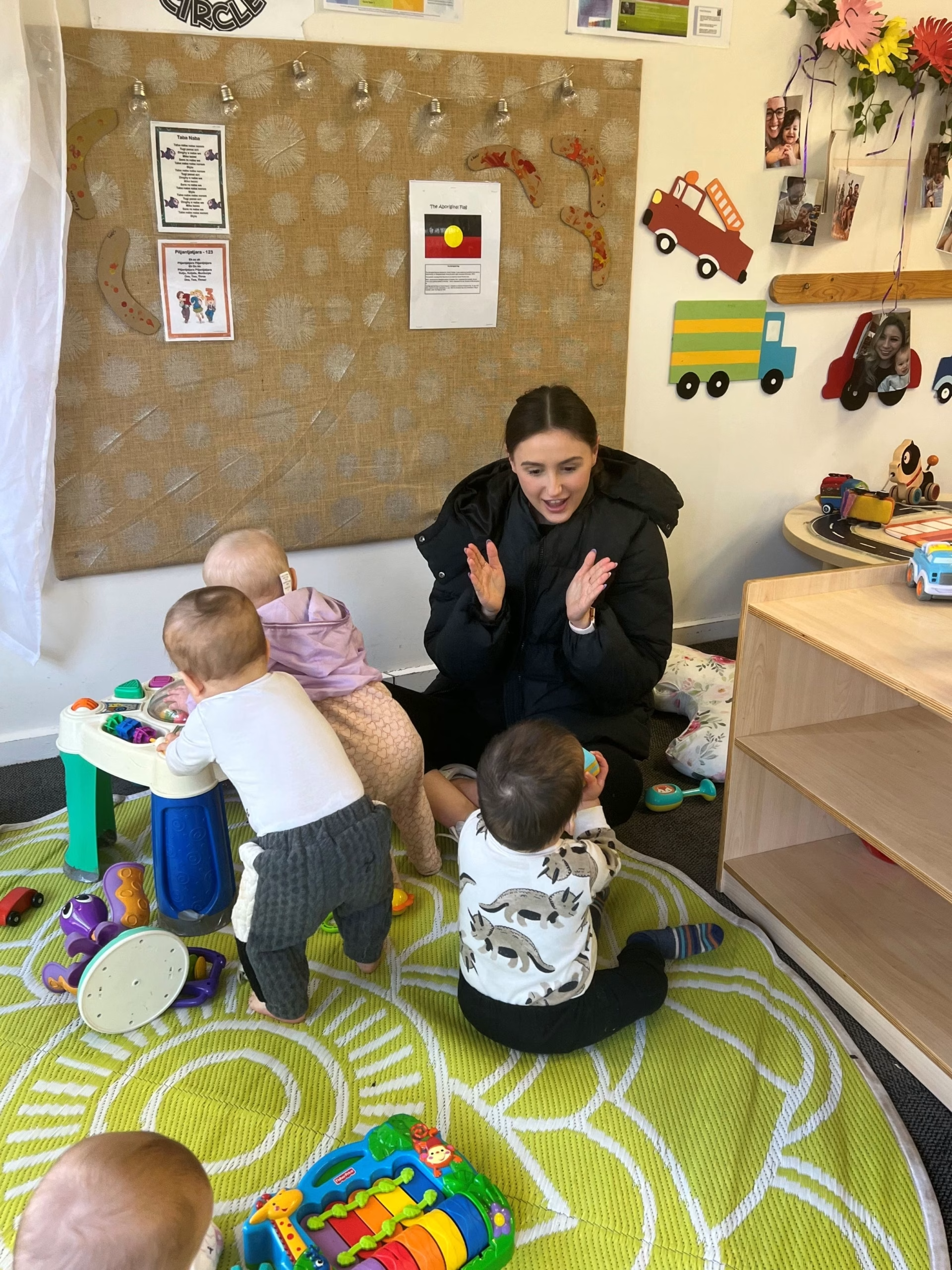
Food, clothing and toys
Food is provided at childcare (long daycare), but kinder children must bring their own lunch and morning and afternoon snacks.
Clothing should be comfortable, appropriate for the weather and include firm-grip shoes that enclose the feet. No thongs or crocs. Be ready for clothes to get dirty – play can be messy!
Toys: If your child would like to bring a favourite toy from home, please let your educator know and label anything they bring. Services are busy places, and we can’t accept responsibility for toys brought from home.
Encouraging healthy eating
Our services encourage healthy eating habits. Programs include routines that promote good nutrition, because nutritious food is the fuel our brains need for healthy development. Children will be encouraged to listen to their body: they won’t be forced to eat food if they don’t want to.
If your child is at kindergarten, please provide enough food for the whole session. You may want to have multiple containers for food (e.g. lunch and snacks).
The sharing of history and culture often happens through food. If that is something you would like to share, our teaching teams would love to hear from you.
For more information, see our Nutrition Policy.
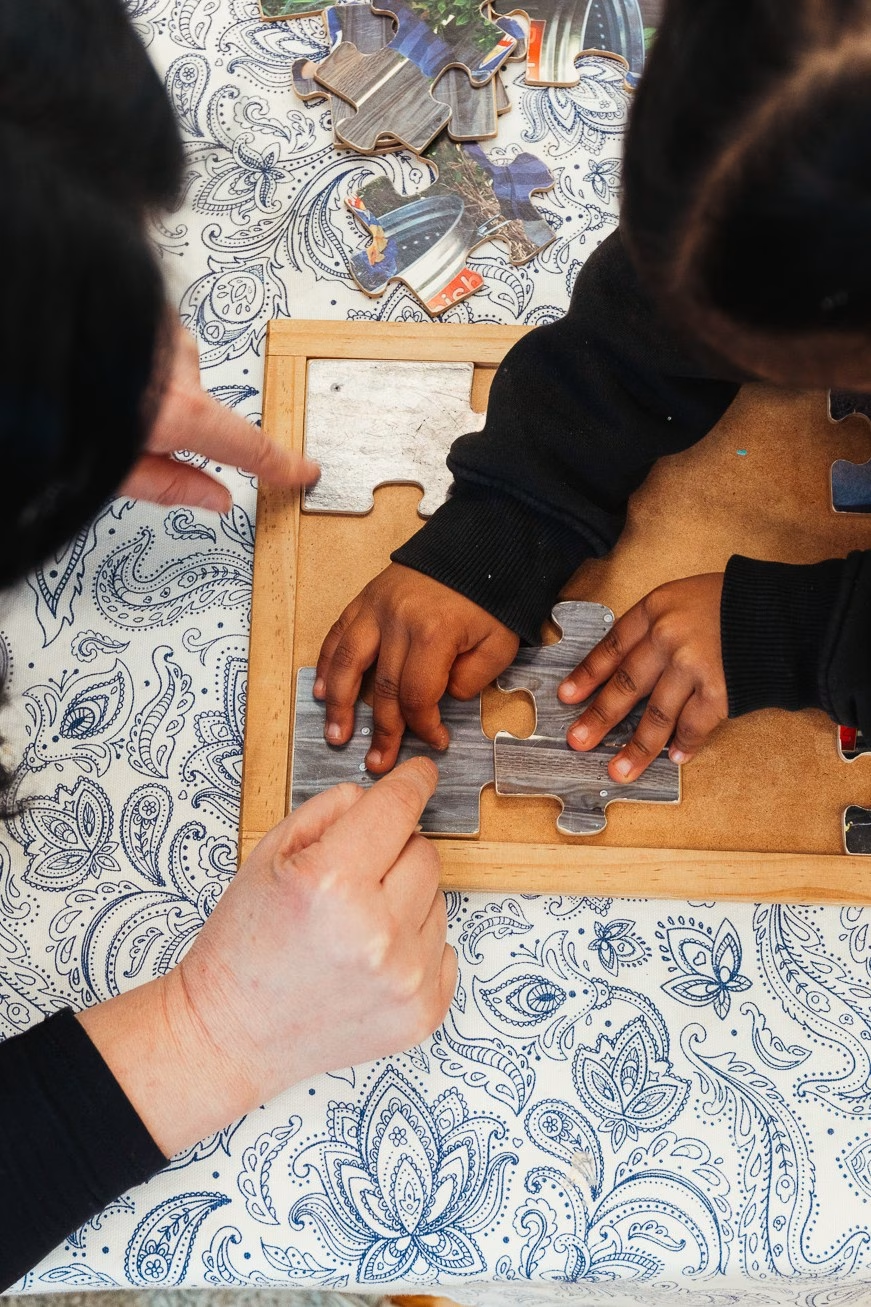
Health, safety and wellbeing
We are committed to providing a safe and inclusive environment for our entire early-learning community.
Immunisation
The Government’s ‘No Jab, No Play’ legislation requires every child to be fully vaccinated for their age to attend any early learning service. You are required to provide your service with your child’s up-to-date immunisation records. If your child is not yet vaccinated, our educators will support you through the process. Your child will not be able to attend an ECMS service until their records meet the requirements of the law. For more information, see our Immunisation Policy.
Illness and infectious disease
If your child has an infectious disease, please keep them at home and let us know straight away. Whatever you tell us is confidential. Your child must stay at home if they show any of these symptoms:
- 38°C or higher temperature
- vomiting or diarrhoea
- rashes that can’t be explained
- red, swollen and discharging eyes
- unusually tired, irritable or not eating and drinking.
If your child becomes unwell while at the service, our team will make them comfortable and ask you (or one of your emergency contacts) to pick them up. When your child is feeling better with no symptoms for 24 hours, they will be welcome to return. For more information, see our Infectious Diseases Policy.
Medication
Whether it’s a one-off issue or an ongoing one, talk to your educators if your child is on regular medication. Your child cannot start until everything is in place, including medication and an action plan. We need to know how much your child takes and how often, and also if there are any changes. That will enable us to set up a support plan.
Medical management plans
If your child has a medical condition that requires treatment, please tell your educator. Our team will provide support and care so that your child can participate equally at the service. Under national regulations, Medical Management Plans are required for any child who is at risk of:
- asthma
- allergic reaction
- anaphylaxis
- eczema
- allergic rhinitis (hay fever)
- diabetes
- epilepsy.
Please ask your doctor to create a plan if you need one.
Allergies
The safety and wellbeing of children who are at risk of anaphylaxis, food allergies or food intolerances is paramount. If your child has an allergy, you must let us know so that our team can work with you to develop risk minimisation and management strategies.
Incidents and accidents
All our teachers hold first aid qualifications. If your child is hurt at the service, we will comfort them, treat any minor injuries and monitor how they’re feeling. We will call and let you know what’s happened and, if necessary, ask you to pick them up.
Medical emergencies
If your child has a medical emergency, the service will:
- call an ambulance and follow their instructions
- administer first aid until the ambulance arrives
- call you and keep you updated.
Child safe environment
As a child-safe organisation, we rigorously follow Victorian Government standards. All staff complete annual training on child safety from the Department Education and have mandatory reporting responsibilities. For more information, see our Child Safety Commitment and Child Safety and Wellbeing Policy.
Supporting all children
We ensure our services meet the needs of all children. We have a support team that includes leaders, coaches and social workers who work with our teaching teams to create inclusive environments.
If your child need support, please tell your child’s educator how we can help. If your child is working with an allied health professional, we will support their work within the program.
Celebrating diversity and belonging
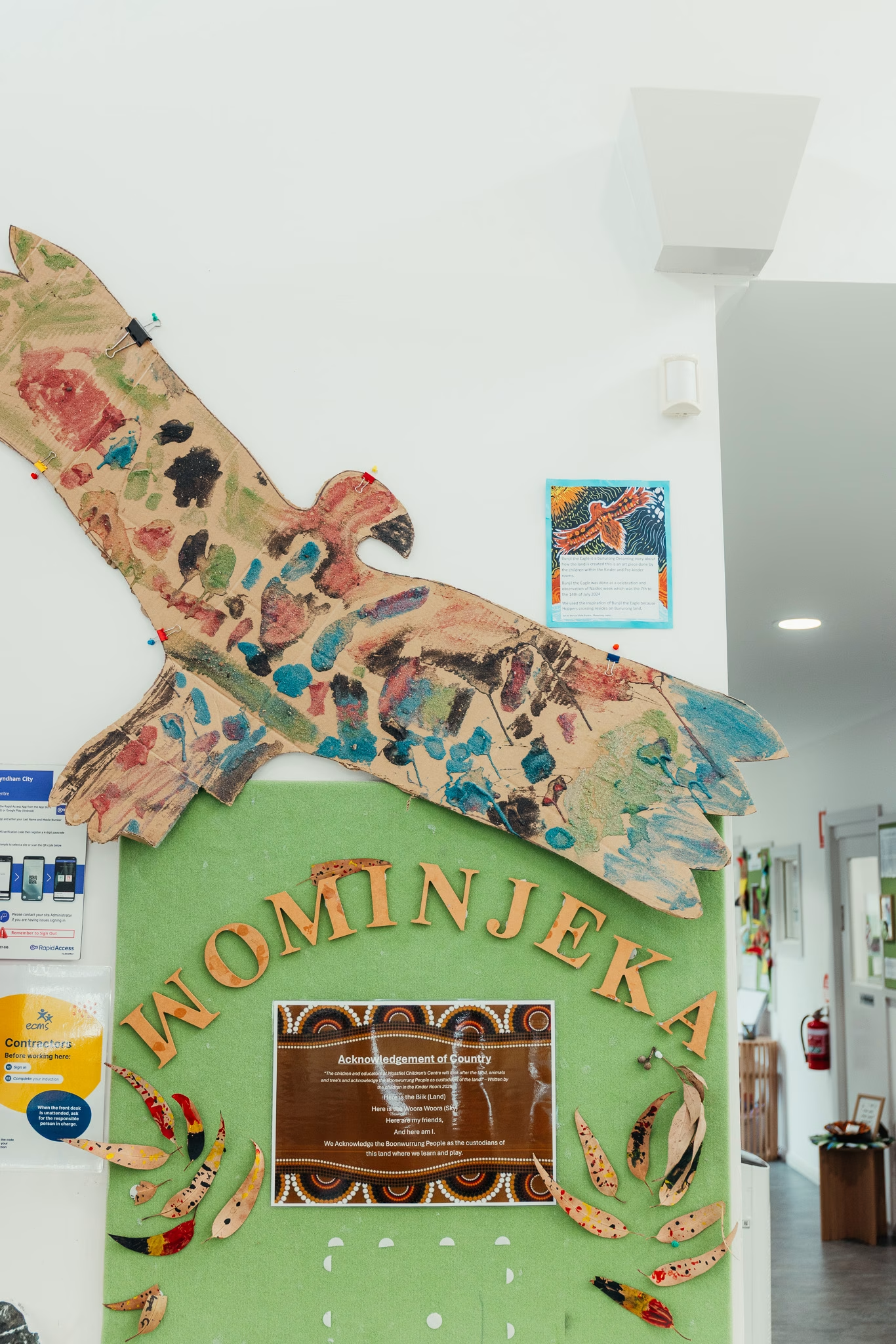
We work hard to ensure children from culturally and linguistically diverse backgrounds feel they belong. Our place-based approach means activities, celebrations and events will be informed by the unique characteristics of the local community. The importance of place also means that we honour Aboriginal and Torres Strait Islander perspectives and their ongoing connection to this land.
To ensure all our families feel included, we don’t host Mothers’ or Fathers’ Day. In our services there are many different ways to celebrate families and special people in a child’s life. Watch these short videos for more on:
Keeping you up to date
Our main communication tool is Storypark. It lets you and your child’s educators record, share and extend your child’s learning. It’s free, private and online, and you’ll be invited by your service to join with an email link to set up your account. You can also download the Storypark app on your phone. You’ll be in control of who can see what, and it belongs to you. Read this article about Storypark for more information.
Other ways we keep you informed:
- Wall displays showing what children are learning
- Email, SMS and phone calls (if something is urgent, we’ll send an SMS)
- Posters and other announcements in the foyer
Photos
We don’t allow any of our team or visitors to take photographs or videos of children without your consent, including for marketing. Similarly, we ask that you talk with us if you want to take a photo of your child at the service or if you want to share a photo on social media. If you’re not sure what’s allowed, please ask.
How to give feedback
Feedback is always welcome and the different ways to share it are displayed at your service. The best people to share complaints with are your Nominated Supervisor, Service Director or Area Manager.
Alternatively, you can share your feedback via to our platform 1Place. It’s where you can share compliments or complaints about a service. You can tell us your name or remain anonymous. All feedback is reviewed and followed up.
Also see our Complaints and Feedback Policy.
Questions and comments
Get in touch with our team.


ECMS acknowledges Aboriginal and Torres Strait Islander peoples as the first inhabitants of the nation and the traditional custodians of the lands on which we live, learn, work and play. Aboriginal people have a long tradition of teaching and learning through sharing their connections with country, community, language and culture. We recognise their continuing connection to the country, and we pay respects to elders past and present.